
Essential details
Shipping:Express Delivery
Product Introduction
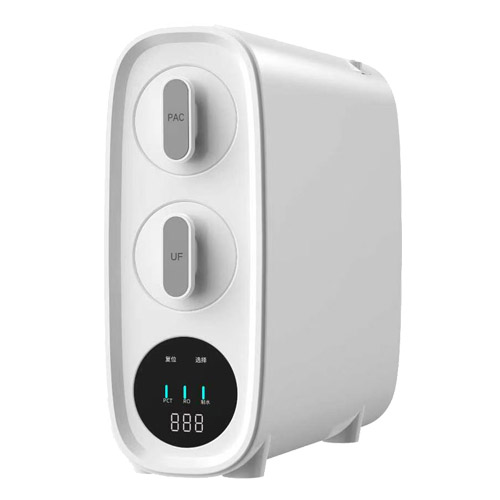
What is the future for the under sink water purifier?

The future of under-sink water purifiers will see robust growth and notable technological and market shifts:
1 Sustained market expansion
Driven by rising health awareness and demand for space-saving home appliances, the global market will maintain a steady CAGR, with the overall water purifier market projected to hit $54.11 billion by 2030.
2 Advanced filtration upgrades
Low-waste RO systems, multi-stage composite filters and UVC LED sterilization will become mainstream, to achieve higher purification efficiency while cutting water waste.
3 Smart and user-friendly trends
New models will integrate smart filter replacement reminders, real-time water quality monitoring, and seamless connection with smart home systems.
4 Eco-friendly and compact design
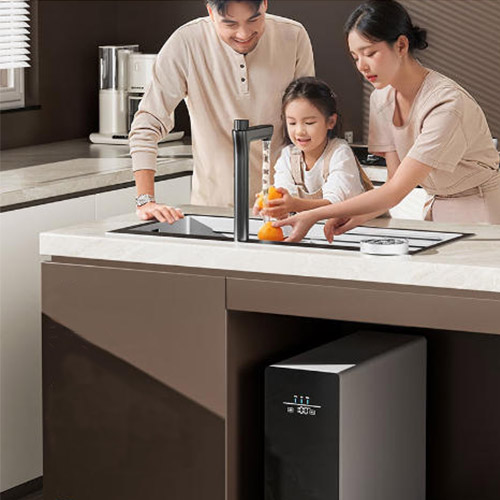
Tankless, space-saving structures and sustainable, low-energy purification solutions will be more widely adopted, fitting better into modern small kitchens.
5 Wider application scenarios
The demand will expand from households to commercial scenarios, with stricter regional water quality regulations further boosting market penetration.
Driven by rising health awareness and demand for space-saving home appliances, the global market will maintain a steady CAGR, with the overall water purifier market projected to hit $54.11 billion by 2030.
2 Advanced filtration upgrades
Low-waste RO systems, multi-stage composite filters and UVC LED sterilization will become mainstream, to achieve higher purification efficiency while cutting water waste.
3 Smart and user-friendly trends
New models will integrate smart filter replacement reminders, real-time water quality monitoring, and seamless connection with smart home systems.
4 Eco-friendly and compact design
Tankless, space-saving structures and sustainable, low-energy purification solutions will be more widely adopted, fitting better into modern small kitchens.
5 Wider application scenarios
The demand will expand from households to commercial scenarios, with stricter regional water quality regulations further boosting market penetration.

How to choose the good water purifiers?
To pick a high-quality water purifier that fits your needs, follow these practical steps:
1 Test your local water profile first
Check your municipal water report or test private well water to confirm contaminants like chlorine, lead, hardness minerals or high TDS. This helps you match the right filtration tech instead of choosing blindly.
2 Match core filtration technology to your scenario
For high-TDS hard water areas: Prioritize RO systems, which remove up to 99% of dissolved salts, heavy metals and chemicals.
For urban chlorinated tap water: Activated carbon filters work well to eliminate odors, VOCs and residual chlorine at a lower cost.
For microbe-contaminated water sources: Add UV purification modules to inactivate 99.99% of bacteria and viruses without changing water taste.
3 Evaluate practical performance details
Check key specs: confirm the system won't waste excessive water, the heating/cooling function (if any) meets your daily use, and the filter lifespan is reasonable to cut long-term maintenance costs.
Pick user-friendly models
Choose products with reminding function. For busy users, models with smart filter replacement alerts, wall-mounted or under-sink space-saving designs are more recommended.
4 Calculate long-term cost
Avoid overpriced units with unnecessary functions. Figure out the total expense of filter replacement in 3-5 years, to get a cost-effective option that balances one-time payment and follow-up upkeep.
Check your municipal water report or test private well water to confirm contaminants like chlorine, lead, hardness minerals or high TDS. This helps you match the right filtration tech instead of choosing blindly.
2 Match core filtration technology to your scenario
For high-TDS hard water areas: Prioritize RO systems, which remove up to 99% of dissolved salts, heavy metals and chemicals.
For urban chlorinated tap water: Activated carbon filters work well to eliminate odors, VOCs and residual chlorine at a lower cost.
For microbe-contaminated water sources: Add UV purification modules to inactivate 99.99% of bacteria and viruses without changing water taste.
3 Evaluate practical performance details
Check key specs: confirm the system won't waste excessive water, the heating/cooling function (if any) meets your daily use, and the filter lifespan is reasonable to cut long-term maintenance costs.
Pick user-friendly models
Choose products with reminding function. For busy users, models with smart filter replacement alerts, wall-mounted or under-sink space-saving designs are more recommended.
4 Calculate long-term cost
Avoid overpriced units with unnecessary functions. Figure out the total expense of filter replacement in 3-5 years, to get a cost-effective option that balances one-time payment and follow-up upkeep.

How to know when the filters need be replaced?
You can judge if a water purifier filter needs replacement through these practical, easy-to-follow methods:
1 Check water quality changes
If the purified water turns cloudy, develops odd smells or tastes, or the TDS value of RO-purified water rises far beyond its normal range, the filter has lost its effectiveness and must be replaced immediately.
2 Notice abnormal water flow
When the water pressure stays normal but the outlet flow drops sharply, or the water comes out in an intermittent, unstable way, it means the filter is severely clogged by accumulated impurities.
3 Refer to the usage time baseline
Different filters have standard service lives: PP cotton filters need replacement every 3-6 months, activated carbon filters every 6-12 months, and RO membrane filters every 2-3 years. Replace them in time once they exceed the recommended cycle.
4 Follow the device's built-in alerts
Most modern water purifiers are equipped with indicator lights or voice alarms. When the light turns red or the system sends out a continuous reminder, it is a direct official signal that the filter needs an urgent replacement.
5 Check the filter's physical state
Take out the filter for inspection: if the PP cotton turns dark black or the filter surface is covered with thick dirt, it has reached the end of its service life and can no longer guarantee water safety.
If the purified water turns cloudy, develops odd smells or tastes, or the TDS value of RO-purified water rises far beyond its normal range, the filter has lost its effectiveness and must be replaced immediately.
2 Notice abnormal water flow
When the water pressure stays normal but the outlet flow drops sharply, or the water comes out in an intermittent, unstable way, it means the filter is severely clogged by accumulated impurities.
3 Refer to the usage time baseline
Different filters have standard service lives: PP cotton filters need replacement every 3-6 months, activated carbon filters every 6-12 months, and RO membrane filters every 2-3 years. Replace them in time once they exceed the recommended cycle.
4 Follow the device's built-in alerts
Most modern water purifiers are equipped with indicator lights or voice alarms. When the light turns red or the system sends out a continuous reminder, it is a direct official signal that the filter needs an urgent replacement.
5 Check the filter's physical state
Take out the filter for inspection: if the PP cotton turns dark black or the filter surface is covered with thick dirt, it has reached the end of its service life and can no longer guarantee water safety.