
Essential details
Shipping:Express Delivery
Product Introduction
What is the future for the water dispenser?
The future of water dispensers will see steady growth and notable innovative shifts, as outlined below:
1 Sustained market expansion
The global water dispenser market, valued at USD 3,229.38 million in 2025, is projected to grow at a CAGR of 8.4% and exceed USD 7,234.56 million by 2035, driven by rising demand for convenient, safe drinking water in households, offices and public venues.
2 Widespread smart tech integration
Models with high-precision NTC thermistor sensors for precise temperature control, touchless operation, smart leak alerts and IoT-based maintenance reminders will dominate the market, catering to users' demands for hygiene and convenience.
3 Eco-friendly and sustainable trends
Bottle-less POU (Point of Use) dispensers connected directly to water supplies will become more popular, drastically cutting plastic waste from bottled water and aligning with global low-carbon initiatives.
4 Scenario-based functional upgrades
New products will feature compact, space-saving designs, built-in multi-stage filtration, UV sterilization and remineralization modules, to deliver healthier, better-tasting water that fits diverse needs from home hydration to commercial high-traffic scenarios.
5 Regional market growth momentum
North America and other regions with high awareness of water safety will maintain strong demand, while emerging markets will see rapid penetration of energy-saving, intelligent water dispensers.
The global water dispenser market, valued at USD 3,229.38 million in 2025, is projected to grow at a CAGR of 8.4% and exceed USD 7,234.56 million by 2035, driven by rising demand for convenient, safe drinking water in households, offices and public venues.
2 Widespread smart tech integration
Models with high-precision NTC thermistor sensors for precise temperature control, touchless operation, smart leak alerts and IoT-based maintenance reminders will dominate the market, catering to users' demands for hygiene and convenience.
3 Eco-friendly and sustainable trends
Bottle-less POU (Point of Use) dispensers connected directly to water supplies will become more popular, drastically cutting plastic waste from bottled water and aligning with global low-carbon initiatives.
4 Scenario-based functional upgrades
New products will feature compact, space-saving designs, built-in multi-stage filtration, UV sterilization and remineralization modules, to deliver healthier, better-tasting water that fits diverse needs from home hydration to commercial high-traffic scenarios.
5 Regional market growth momentum
North America and other regions with high awareness of water safety will maintain strong demand, while emerging markets will see rapid penetration of energy-saving, intelligent water dispensers.
How to choose the good water dispensers?
To select a high-quality water dispenser that matches your daily needs, follow these practical, targeted guidelines:
1 Pick the right cooling system first
Compressor-cooled models are far more durable than thermoelectric ones: they maintain a stable 4–8°C cold water output even during continuous dispensing, re-chill a full 3L tank in under 25 minutes, and have a service life of 8–12 years, making them ideal for high-traffic scenarios.
2 Match the type to your usage scenario
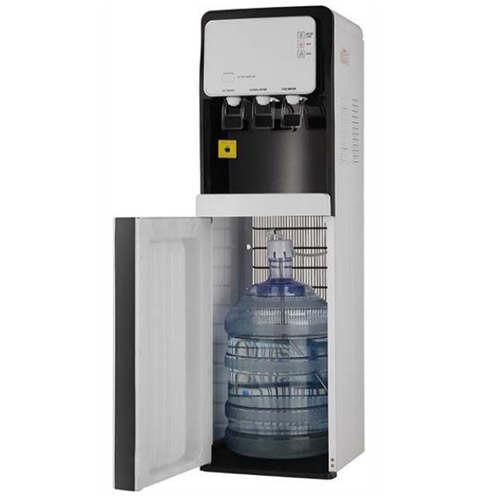
For homes with elderly users: Choose bottom-loading models to avoid heavy lifting of 19L water bottles, which also reduce spill risks.
For public areas like hospitals or schools: Opt for touchless dispensers with infrared motion sensors, which minimize germ cross-contamination.
For families prioritizing water purity: Select all-in-one units with integrated RO, carbon filters and UV-C sterilization to deliver purified water on demand.
3 Verify core performance details
Check that the cold tank uses ≥25mm thick polyurethane foam for optimal insulation, confirm the hot water output can reach 92–95°C, and prioritize models with child safety locks to prevent accidental scalds.
4 Evaluate long-term cost and compatibility
Confirm the dispenser is compatible with standard water bottles or local tap water plumbing, check the energy efficiency rating to cut long-term electricity bills, and avoid overpaying for unnecessary extra features you will never use.
5 Check official safety certifications
Make sure the product has passed local drinking water safety and electrical safety certifications, to guarantee both water quality and long-term operational reliability.
Compressor-cooled models are far more durable than thermoelectric ones: they maintain a stable 4–8°C cold water output even during continuous dispensing, re-chill a full 3L tank in under 25 minutes, and have a service life of 8–12 years, making them ideal for high-traffic scenarios.
2 Match the type to your usage scenario
For homes with elderly users: Choose bottom-loading models to avoid heavy lifting of 19L water bottles, which also reduce spill risks.
For public areas like hospitals or schools: Opt for touchless dispensers with infrared motion sensors, which minimize germ cross-contamination.
For families prioritizing water purity: Select all-in-one units with integrated RO, carbon filters and UV-C sterilization to deliver purified water on demand.
3 Verify core performance details
Check that the cold tank uses ≥25mm thick polyurethane foam for optimal insulation, confirm the hot water output can reach 92–95°C, and prioritize models with child safety locks to prevent accidental scalds.
4 Evaluate long-term cost and compatibility
Confirm the dispenser is compatible with standard water bottles or local tap water plumbing, check the energy efficiency rating to cut long-term electricity bills, and avoid overpaying for unnecessary extra features you will never use.
5 Check official safety certifications
Make sure the product has passed local drinking water safety and electrical safety certifications, to guarantee both water quality and long-term operational reliability.
How often do we need to change the water dispensers?
The average lifespan of a water dispenser varies by its type, build quality and maintenance routine:
1 Whole machine lifespan
A well-maintained high-quality water dispenser can normally last 5 to 12 years. Stainless steel models used in high-traffic public areas can serve 5 to 8 years, while premium household compressor-cooled units can reach 8 to 12 years.
2 Influencing factors
Frequent heavy use, poor local water quality and lack of regular descaling will shorten the dispenser's lifespan, while proper maintenance can keep it running reliably for years.
3 Adjust the cycle according to actual conditionsA well-maintained high-quality water dispenser can normally last 5 to 12 years. Stainless steel models used in high-traffic public areas can serve 5 to 8 years, while premium household compressor-cooled units can reach 8 to 12 years.
2 Influencing factors
Frequent heavy use, poor local water quality and lack of regular descaling will shorten the dispenser's lifespan, while proper maintenance can keep it running reliably for years.
If you notice obvious drop of water flow, abnormal water taste, or the device keeps giving filter replacement alerts, you should replace the corresponding parts immediately instead of waiting for the fixed time.